
ABSTRACTIA V
ABSTRACTIA V
Interactive Art
The interface itself is treated as part of the artwork, not as a utility layer. When guidance appears, it does so as a quiet panel that respects the same visual language as the rest of the piece: soft translucency, restrained typography, and generous spacing. Language avoids technical framing and instead offers permission, implying that interaction is optional and exploratory. Accessibility is handled through scale, contrast, and calm pacing rather than through explicit instruction, allowing the work to remain readable and welcoming without calling attention to its accommodations.
Underlying all of this is an emphasis on emotional coherence. Sound, image, motion, and interaction are not optimized for efficiency or feature completeness, but for trust. The participant is never rushed, corrected, or overwhelmed. The system does not attempt to impress through complexity; instead, it recedes, allowing the experience to feel inevitable, almost ambient. What emerges is not a sense of “using” something, but of spending time inside it—an encounter closer to installation art than to software, where interaction feels less like control and more like consent.
Collect this 1/1 work of interactive dynamic art, or spend some time with it first.
Take Me to the Auction Page
This work operates as a quiet invitation rather than a system that announces itself. The experience begins in stillness: light, sound, and image arrive together in a way that suggests atmosphere rather than instruction. The opening screen does not ask the viewer to learn controls or make choices; it simply establishes a tone of calm attention. Sound behaves as an environmental condition, not feedback. Visuals occupy the full field without frames, borders, or visible interface elements, signaling that the viewer has entered a continuous space rather than a layered application.
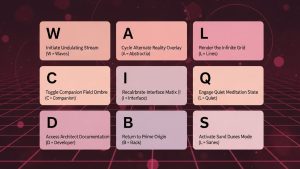
Interaction is revealed gradually and indirectly. The primary gesture—entering the work—feels ceremonial rather than functional, marked by a subtle transition and an intentional sound cue. From that point forward, the experience prioritizes continuity over interruption. State changes occur through fades, blends, and dissolves, so that one moment gives way to the next without sharp edges. Audio does not punctuate actions aggressively; it appears, recedes, and returns in alignment with the emotional weight of the scene rather than the mechanics of input.
Time-based programming coincides with a curation of color per time of day and mood, but it is deliberately understated. Secondary interactions are discoverable and the menu is general rather than exhaustive, allowing the participant to feel as though they are uncovering layers of the piece rather than operating a console. Visual overlays and companion elements are integrated through blending rather than stacking, so they read as shifts in perception instead of additional objects placed on top of the scene. Nothing flashes, snaps, or demands attention. Each intervention is reversible and leaves no residue once dismissed, reinforcing the sense that the work is stable and self-contained.
Yes, that’s right. ABSTRACTIA is Maxximillian’s never-ending dynamic, unique-to-you, interactive work of art—explored as a series. The interface itself is treated as part of the artwork, not as a utility layer. When guidance appears, it does so as a quiet panel that respects the same visual language as the rest of the piece: soft translucency, restrained typography, and generous spacing. Language avoids technical framing and instead offers permission, implying that interaction is optional and exploratory.